Cast Iron Pan-Seared Ribeye Steak
Thick-cut bone-in or boneless ribeye steak seared in screaming-hot cast iron and basted with foaming butter, whole garlic cloves, and fresh rosemary sprigs.
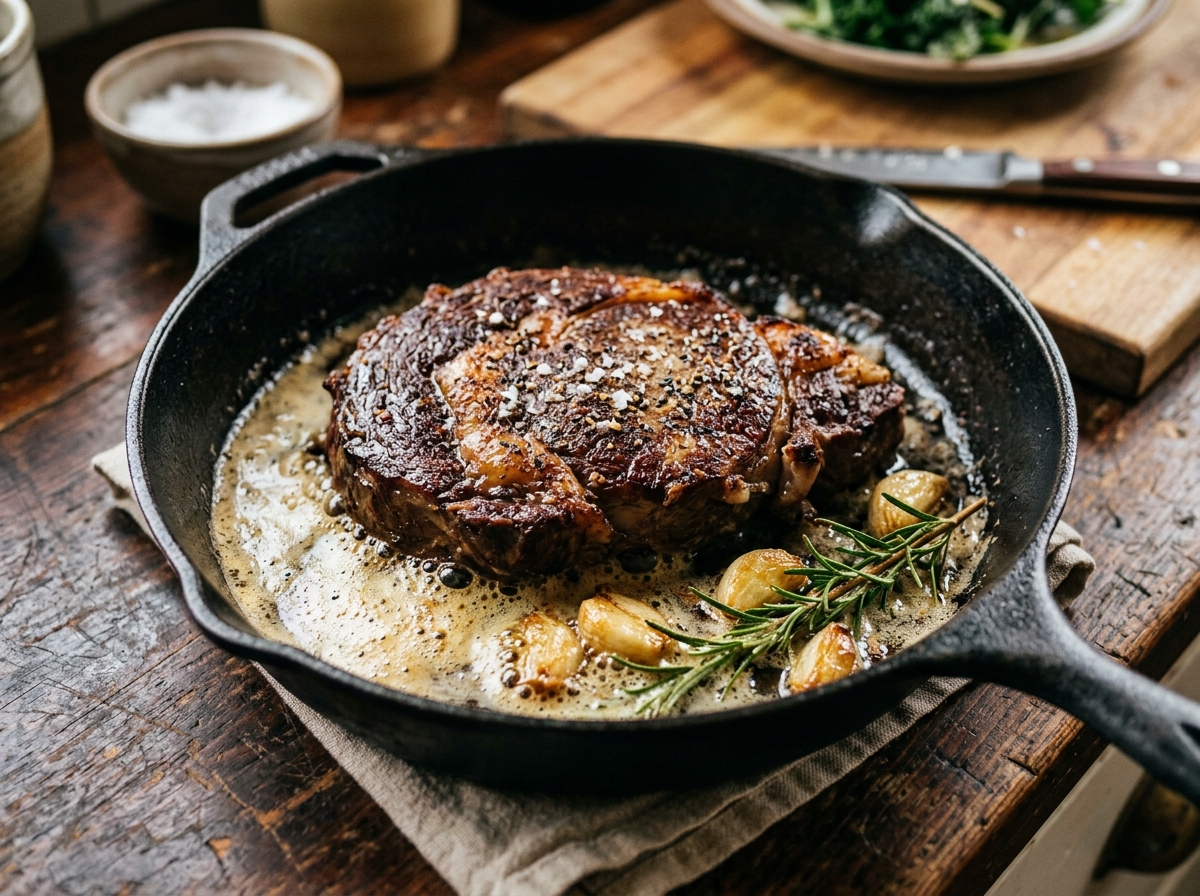
Achieving a true steakhouse-quality ribeye at home does not require an outdoor grill. A screaming-hot, heavy cast iron skillet provides superior conductive heat transfer, producing an edge-to-edge mahogany crust while rendering the rich intramuscular ribeye fat.
The classic French technique of arroser (spoon-basting with foaming butter, crushed garlic, and fresh herbs during the final minutes) infuses the beef with savory nuttiness.
Allowing the meat to rest on a warm cutting board for seven to eight minutes ensures the juices redistribute throughout the fibers rather than spilling out onto the board.
Why This Method Works
Thermal Mass of Cast Iron
A preheated cast iron pan holds immense thermal energy, preventing the pan temperature from plunging when cold meat hits the metal.
Dry Surface Equals Crisp Crust
Salt draws moisture out initially; allowing the steak to sit salted creates a dry, protein-rich surface that browns instantly without steaming.
Butter Basting (Arroser)
Spoon-basting with hot foaming butter cooks the upper surface gently while bathing the steak in garlic-herb infused butterfat.
Ingredient Notes & Regional Substitutions
Thick-Cut Ribeye Steak
Select a steak at least 1.25 to 1.5 inches thick with pronounced white marbling throughout.
Regional naming: Scotch fillet or ribeye steak.
Substitutions: New York strip steak or bone-in rib steak (cowboy steak).
High Smoke Point Oil
Avocado oil, ghee, or beef tallow tolerates extreme cast iron searing heat without smoking acridly.
Regional naming: Neutral high-heat cooking oil.
Substitutions: Canola oil or refined peanut oil.
Unsalted Butter & Fresh Herbs
Unsalted butter allows you to control seasoning; whole rosemary and thyme sprigs release aromatic oils into the fat.
Regional naming: Fresh herbs and butter.
Substitutions: Fresh tarragon or sage.
Cast Iron Pan-Seared Ribeye Steak
Ingredients
- 1 thick-cut boneless ribeye steak (about 1.25 to 1.5 pounds, 1.5 inches thick)
- 1.5 teaspoons coarse kosher salt
- 1 teaspoon freshly cracked coarse black pepper
- 1.5 tablespoons avocado oil (or high smoke point oil)
- 3 tablespoons unsalted butter
- 4 cloves garlic, lightly crushed and peeled
- 3 sprigs fresh rosemary
- 4 sprigs fresh thyme
- Flaky sea salt (such as Maldon), for finishing
Instructions
-
Temper and Dry the Steak
Remove steak from refrigerator 30 to 45 minutes before cooking to take the chill off. Pat both sides completely dry with paper towels. Season aggressively all over (including the fat cap) with kosher salt and black pepper.
Visual Cue Surface should feel dry and well crusted with coarse salt and pepper. -
Preheat Cast Iron to Smoking
Set a 10 or 12-inch heavy cast iron skillet over high heat for 5 to 7 minutes until smoking hot. Add the avocado oil and swirl to coat the bottom.
Visual Cue A faint wisp of white smoke rising from the shimmering oil. -
Initial Sear & Flip
Carefully lay the steak into the skillet away from you. Sear undisturbed for 2 to 3 minutes until a deep, dark brown crust forms. Flip the steak with tongs and sear the second side for 2 minutes. Use tongs to render the fat cap on its side for 1 minute.
Visual Cue Deep mahogany brown, sizzling crust. -
Butter Basting (Arroser)
Reduce heat to medium-low. Add butter, crushed garlic cloves, rosemary, and thyme to the pan. Tilt the skillet slightly toward you and use a large metal spoon to continuously scoop the hot, foaming butter over the top of the steak for 2 to 3 minutes.
Visual Cue Golden foaming butter carrying garlic and herb aroma across the steak. -
Check Internal Temperature
Insert an instant-read digital thermometer horizontally into the center: pull at 125°F (52°C) for medium-rare or 135°F (57°C) for medium (carryover cooking will raise it by 5°F).
Texture Cue Flesh yields gently with springy resistance. -
Rest and Carve
Transfer steak to a warm cutting board or wire rack. Pour pan butter and herbs over the steak and let rest undisturbed for 7 to 8 minutes. Slice against the grain into 1/2-inch thick ribbons, sprinkle with flaky sea salt, and serve.
Visual Cue Juices stay inside the pink interior ribbons of steak.
Estimated Nutrition (Per Serving)
Calculated using USDA ingredient data estimates; actual values will vary depending on specific brands.
Common Mistakes to Avoid
Recipe Variations
Cowboy Bone-In Ribeye
Use a 2-pound bone-in ribeye. Sear in cast iron, then finish in a 400°F (200°C) oven for 5 minutes before butter basting.
Compound Herb Butter
Top sliced resting steak with a disk of softened butter mixed with minced shallot, parsley, and lemon juice.
Serving Suggestions
- Serve with creamy roasted garlic mashed potatoes and grilled asparagus.
- Pair with a bold Cabernet Sauvignon or Malbec.
Storage, Reheating & Freezing Guidance
Refrigeration: Refrigerate leftover sliced steak in an airtight container for up to 3 days.
Freezing: Freezing cooked steak degrades its texture; best consumed fresh.
Reheating: Reheat gently in a 250°F (120°C) oven on a wire rack until warm, or serve cold in a steak salad.
Frequently Asked Questions
Complementary Recipes You Might Enjoy
Dishes with similar techniques, seasonal affinities, or ideal table pairings.
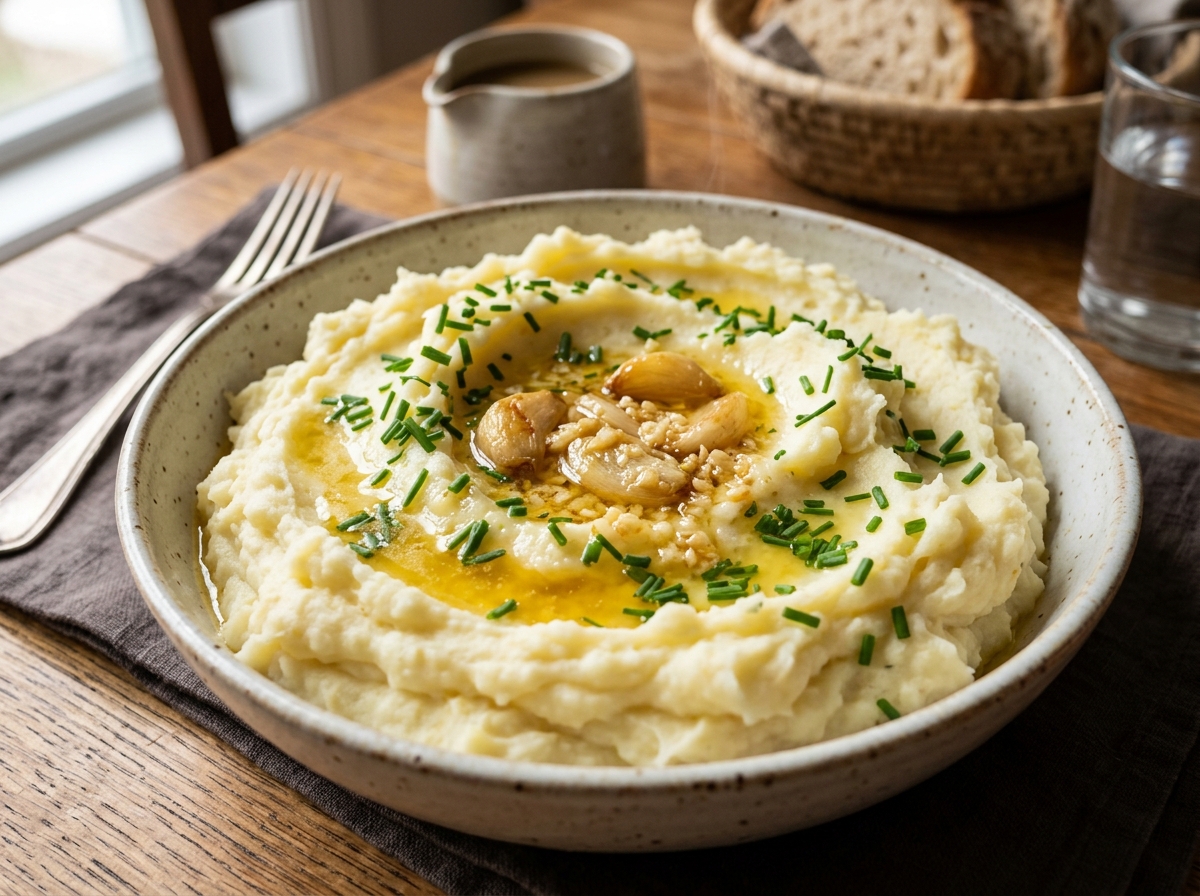
Creamy Roasted Garlic Mashed Potatoes
Fluffy Yukon Gold potatoes whipped with sweet roasted garlic cloves, European cultured butter, warm heavy cream, and snipped fresh chives.
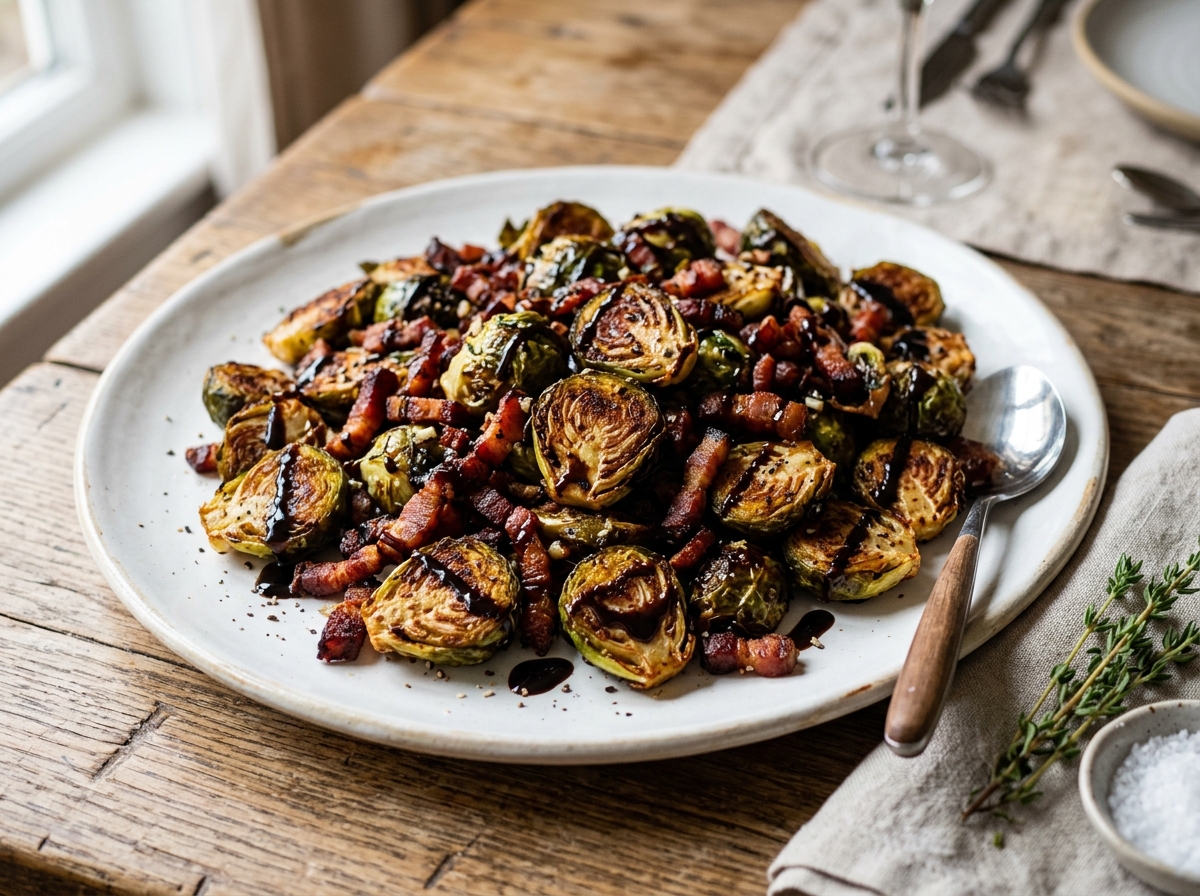
Crispy Balsamic Bacon Brussels Sprouts
Halved Brussels sprouts roasted cut-side down at high heat until deeply caramelized and crispy, tossed with smoky bacon lardons and a tangy aged balsamic glaze.
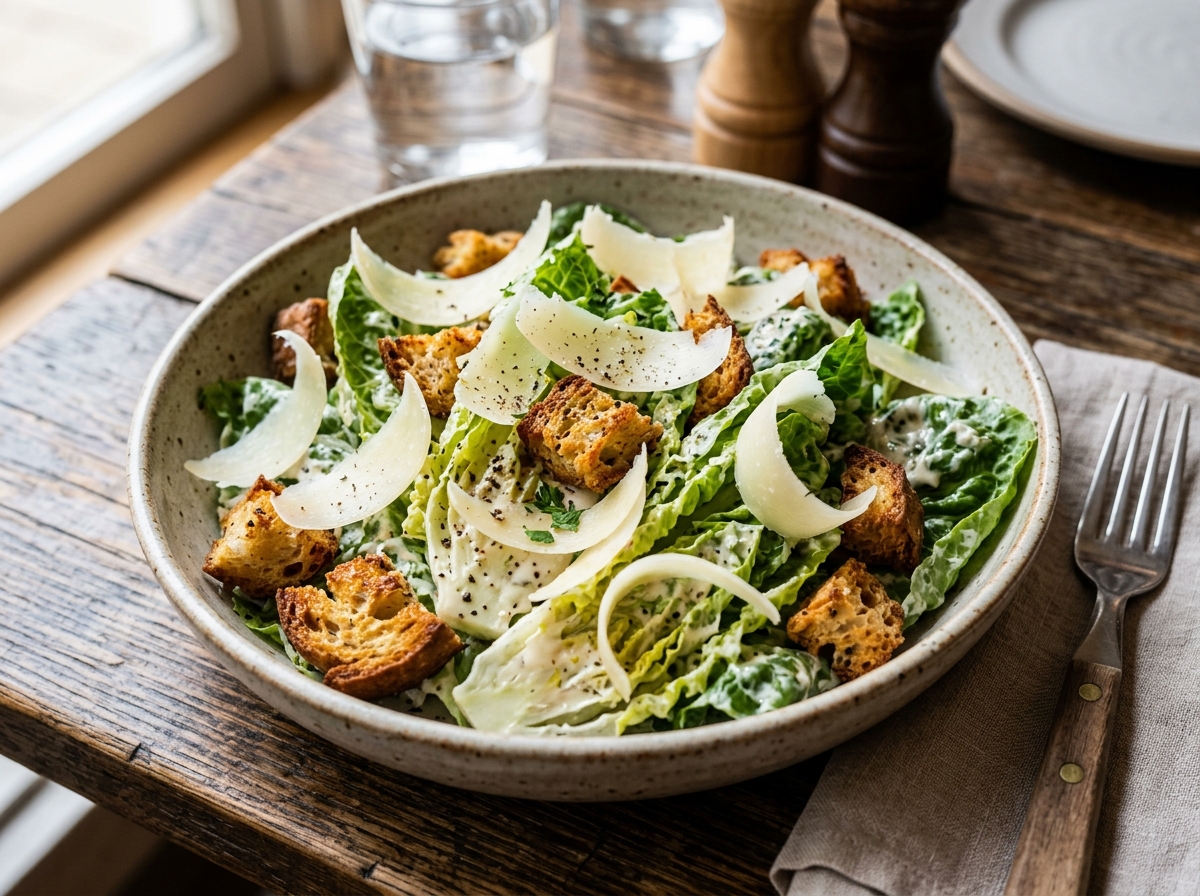
Classic Caesar Salad with Homemade Dressing
Crisp romaine hearts tossed in an authentic emulsion of fresh garlic, anchovy fillets, egg yolk, Dijon mustard, lemon juice, Parmigiano-Reggiano, and golden sourdough croutons.
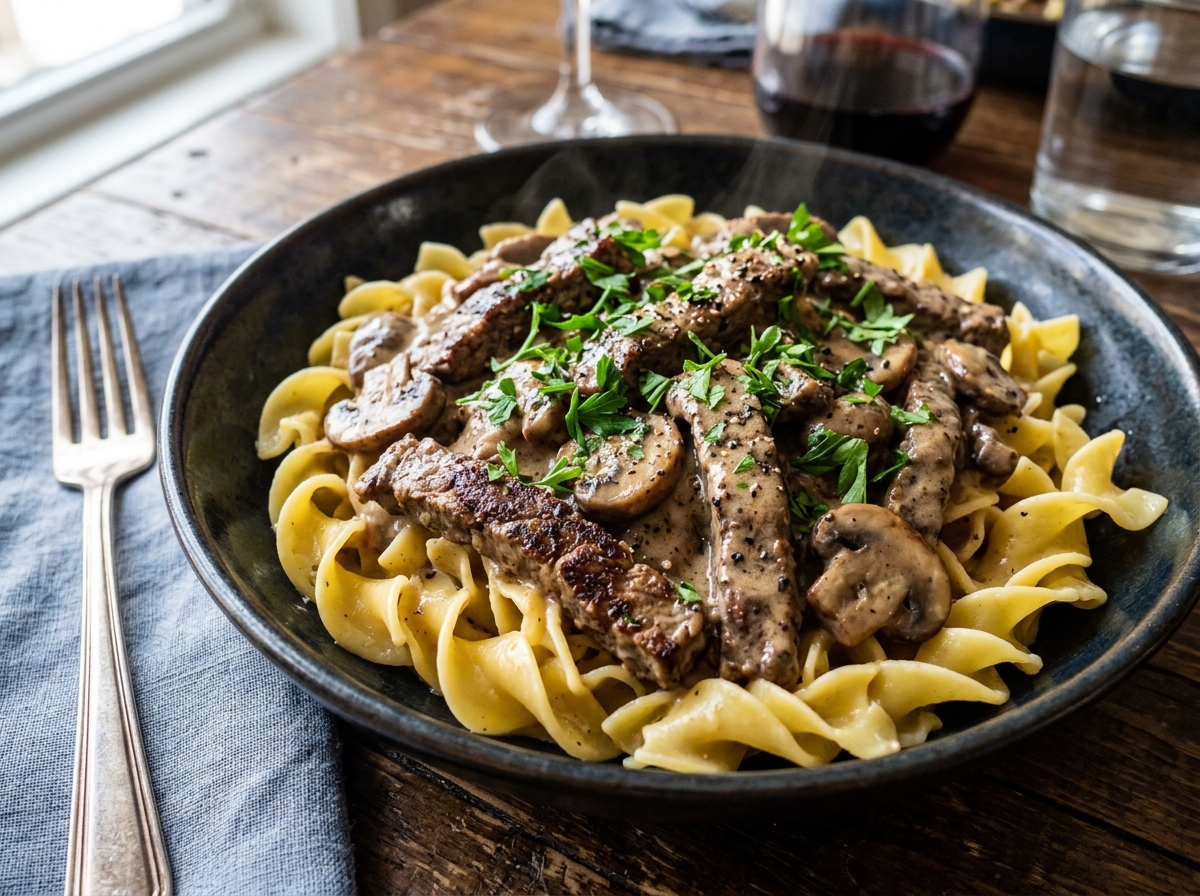
Classic Beef Stroganoff with Cremini Mushrooms
Tender strips of pan-seared sirloin steak and browned cremini mushrooms in a velvety sour cream and Dijon mustard beef gravy over buttered egg noodles.